

What Are the 12 Principles of Agile Manifesto?
February 23, 2026 • By Peter Stakoun
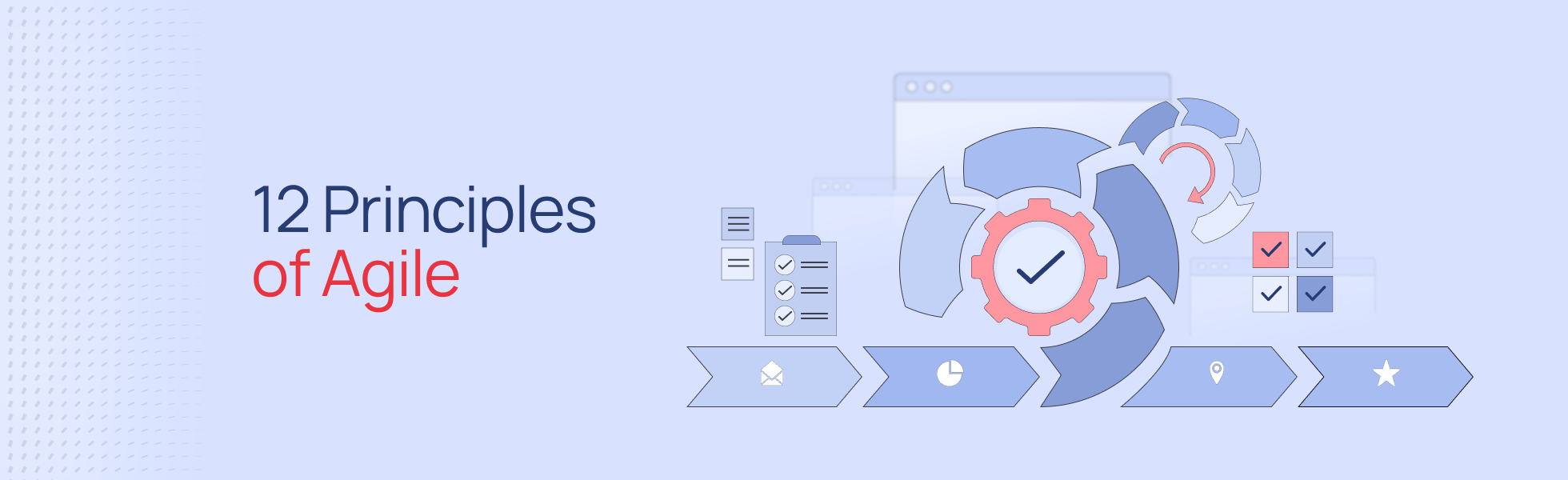
Software teams have moved from just building products to creating, testing, learning, and adjusting in fast loops. That flow comes from Agile. At the center of Agile thinking sit the 12 principles of Agile, a practical compass that guides how high performing teams plan, collaborate, and deliver value.
If you’ve ever wondered what are the 12 principles of Agile manifesto, how they work in real projects, and why they matter for growing tech products, this guide is for you.
What Is Agile Manifesto?
The Agile Manifesto is a foundational document created in 2001 by a group of software practitioners who wanted a better way to build software than heavy, rigid process models. Instead of long planning cycles and late-stage surprises, Agile promotes continuous delivery, customer collaboration, and adaptability in software development.
The manifesto defines values and a working philosophy, while the core principles of Agile methodology translate those values into everyday team behavior.
Today, Agile is used by startups, enterprises, and digital product companies worldwide because it reduces delivery risk, improves product quality, and speeds up time to market.
12 Principles of Agile
About 86% of software development teams use Agile practices . These are the 12 principles of Agile process model that they have to follow:
1. Customer Satisfaction Through Early and Continuous Delivery
Deliver working software early and keep delivering improvements regularly. Frequent releases reduce risk and build trust with customers.
2. Welcome Changing Requirements
Change is not a threat in Agile. Even late in development, changing requirements are accepted if they create better business outcomes.
3. Deliver Working Software Frequently
Ship in short cycles such as two to four weeks. Small releases make progress visible and feedback faster.
4. Business and Developers Work Together Daily
Strong collaboration between technical teams and business stakeholders prevents misunderstandings and speeds decisions.
5. Build Projects Around Motivated Individuals
Give capable people the right environment, support, and trust. High ownership produces high quality results.
6. Face to Face Communication Is Most Effective
Direct conversation reduces ambiguity and accelerates problem solving compared to long documentation chains.
7. Working Software Is the Primary Measure of Progress
Not reports. Not slides. Not task counts. Real, usable software is the true progress indicator.
8. MaintainSustainable Development Pace
Teams should work at a steady, repeatable pace. Burnout reduces quality and increases defects.
9. Continuous Attention to Technical Excellence
Clean architecture, good design, and code quality make systems easier to scale and maintain.
10. Simplicity Is Essential
Do what is necessary now. Avoid over engineering. Simpler solutions are easier to adapt and extend.
11. Self Organizing Teams Produce Best Results
Empowered teams make better technical and delivery decisions because they are closest to the work.
12. Regular Reflection and Adjustment
Teams should review how they work and continuously improve their process. Retrospectives are a core Agile project management practice.
Together, these define the principles of Agile that shape modern product engineering cultures.
Why Software Organizations Need to Follow Agile Principles?
Following the core principles of Agile methodology produces measurable business benefits.
- Faster Time to Market: Short release cycles allow companies to launch features earlier and capture market feedback sooner.
- Higher Product Quality: Continuous testing and iterative development reduce defect accumulation.
- Better Requirement Fit: Because customer feedback is built into the cycle, the final product aligns more closely with user needs.
- Lower Project Risk: Incremental delivery prevents large scale late stage failures common in rigid models.
- Stronger Team Accountability: Agile promotes ownership, transparency, and shared responsibility.
Industry research consistently shows Agile driven teams achieve higher delivery predictability and stakeholder satisfaction compared to strictly sequential models.
Subscribe Newsletter for Latest Updates
Work with Agile Development Firm
Agile works best when it is not just a label but an operating system for delivery. That requires experienced engineers, structured sprint planning, automated testing, and product focused collaboration.
Vertex applies Agile delivery across product engineering, QA, dedicated development teams, and resource augmentation models. Teams operate in sprint cycles, maintain transparent backlogs, and align development with measurable business goals.
If your product roadmap needs speed without chaos, Agile driven execution makes the difference between motion and momentum.
FAQs
What Are the Cs of Agile?
The commonly referenced Cs of Agile are Communication, Collaboration, Customer focus, and Continuous improvement. These reinforce the people first and feedback driven nature of Agile teams.
Is Agile Used Just in Software Projects?
No. While Agile started in software, it is now used in marketing, product design, operations, and even HR workflows. Any environment that benefits from iteration and feedback can apply Agile principles.
Why Agile Is Better Than Waterfall?
Agile is often preferred over Waterfall because it supports change, delivers value earlier, and reduces late stage surprises. Waterfall relies on fixed upfront requirements, while Agile adapts through continuous feedback and incremental delivery.
Related Blogs
Digital Transformation Challenges: Why Most Companies Fail to Modernize
Digital transformation challenges are stopping many companies from scaling and achieving their intended outcomes.
Waterfall vs Agile vs Scrum: Understanding the Best Project Management Methodology
When it comes to managing software projects, especially in complex and dynamic environments, choosing the…
What Is Scrum Methodology in Software Development?
Scrum methodology offers a structured yet flexible approach that helps teams manage complex projects with…