

In-Depth Comparison of Hiring Own QA Tester or Outsource QA
December 12, 2025 • By Peter Stakoun
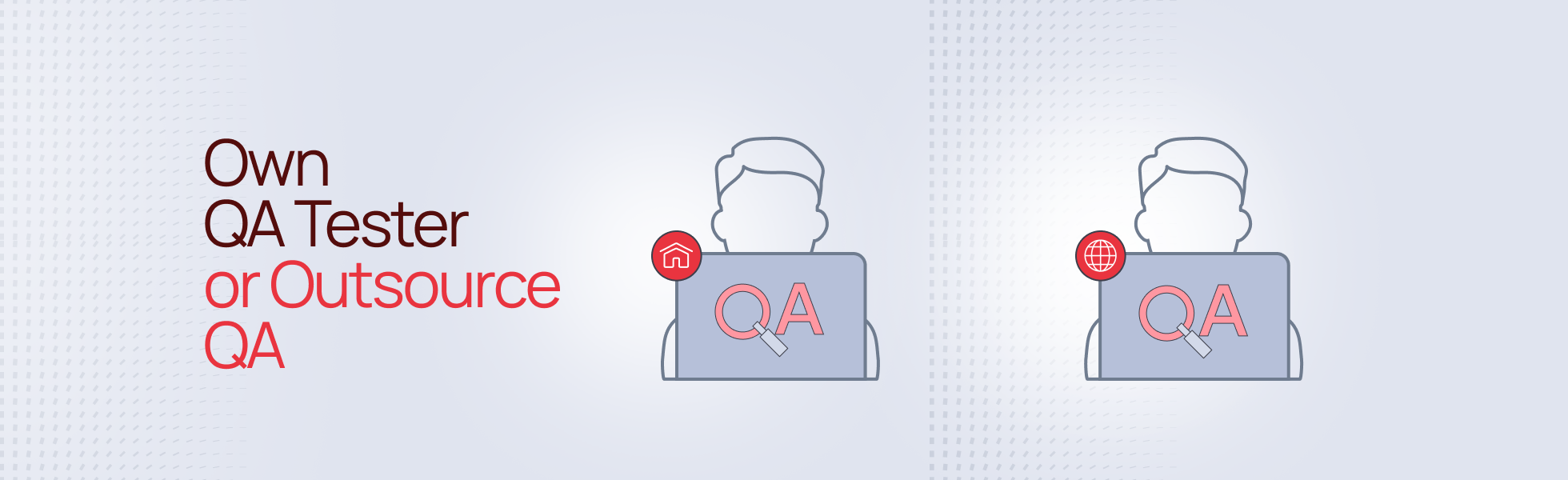
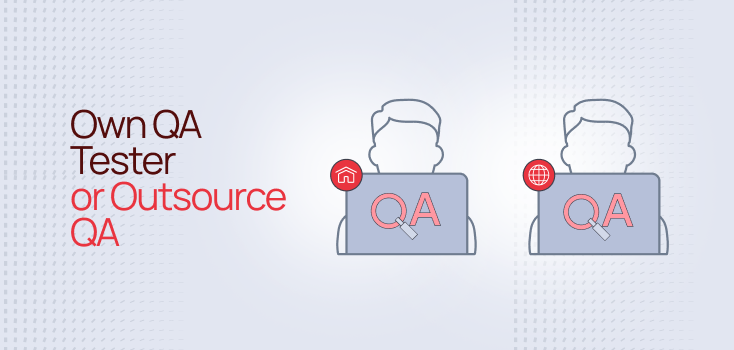
Businesses around the world can either hire their own QA tester or outsource QA from a recruitment firm. The requirement depends on their budget, flexibility, and need for control over the resources. In-house QA hiring provides is more efficient for ad-hoc collaboration, but outsourcing your QA resources is more cost-effective and skips the hiring hassle.
Many companies who provide software quality assurance services struggle with hiring QA talent. This brings us to the question:
Should you hire your own QA tester or outsource QA services to a specialized vendor?
Let’s compare in-house QA testers vs outsourced QA testing to find the answer.
What Does a QA Tester Do?
A QA tester (Quality Assurance tester) ensures that your product meets quality standards before release. The average salary of a QA tester in Lahore is around 29,00,000 PKR.
Their responsibilities include:
- Identifying bugs and issues
- Ensuring usability and functionality
- Running manual and automated tests
- Preventing production failures
- Supporting smooth, reliable releases
Having a strong QA process protects your reputation as your product becomes reliable in the market, saves engineering costs, and improves user satisfaction.
Should You Hire Your Own QA Tester or Outsource QA?
Below is a deep analysis of both models, based on industry research from top staff outsourcing companies across the globe.
Pros of Hiring an In-House QA Tester
1. Full Control and Direct Collaboration
Your internal QA team stays fully aligned with your company’s culture, processes, and long-term goals. Communication is faster, and collaboration between QA and developers becomes seamless.
2. Deep Product Knowledge Over Time
An in-house tester develops a deep understanding of your product, workflows, edge cases, and customer expectations. This helps with long-term consistency and faster bug detection.
3. Better Fit for Highly Confidential Systems
If your product handles sensitive data (FinTech, health, compliance-heavy platforms), having your QA in-house reduces risks associated with sharing code externally.
Cons of Hiring an In-House QA Tester
1. Higher Cost & Overhead
Salaries, benefits, training, HR costs, and testing infrastructure make in-house QA far more expensive, especially for small and mid-sized businesses.
2. Difficult and Slow Hiring Process
Finding an experienced QA tester is a challenge. Recruitment can take weeks — or even months — delaying project timelines.
3. Limited Skills for Specialized Testing
A single tester may not have expertise in automation testing, performance testing, security testing, or specialized frameworks. Expanding the team increases cost.
4. Scalability Issues
If your workload increases suddenly, an in-house QA team may struggle to keep up, causing release delays.
Pros of QA Outsourcing
1. Access to Expert Skills & Tools
Outsourced QA services give you immediate access to specialists in automation, performance testing, regression testing, security testing, and more.
These experts stay updated with the latest technologies, ensuring high-quality test coverage.
2. Cost-Effective for All Business Sizes
Outsourced QA testing removes the cost of recruitment, infrastructure, and full-time employment.
You pay only for the services you need, making it ideal for startups and enterprises alike.
3. Faster Time-to-Market
QA outsourcing companies often work in parallel with your development team and offer 24/7 testing cycles across time zones. This leads to faster bug detection and quicker product releases.
4. Flexibility and Easy Scalability
Need 3 testers this month and 10 next month? Outsourcing allows instant scaling. No hiring delays. No long-term commitments.
5. Objective and Unbiased Testing
External QA teams bring a fresh perspective, helping uncover critical issues internal teams may overlook due to familiarity.
Cons of QA Outsourcing
1. Security and Confidentiality Concerns
Sharing sensitive code or user data with an external team can be risky. Clear NDAs, access controls, and secure practices are essential.
2. Less Immediate Control
Outsourced teams require project alignment, documentation, and communication. Without proper processes, misunderstandings can happen.
3. Onboarding Takes Time
The QA vendor needs time to understand your product, workflows, and tools, which may cause a short onboarding delay.
4. Vendor Dependency
If the partner is unreliable, communication gaps may affect delivery schedules.
Subscribe Newsletter for Latest Updates
Summary of Comparison Between Hiring In-House QA vs Outsourced QA
| Factor | In-House QA Tester | Outsourced QA Services |
| Cost | High | Lower, flexible |
| Expertise | Limited to 1–2 people | Access to diverse specialists |
| Scalability | Hard to scale | Easy + instant |
| Time-to-Market | Slower | Much faster |
| Control | Strong | Moderate |
| Best For | Long-term, confidential projects | Fast-growing teams, startups, scaling products, complex testing |
The Best Option In Between Own QA vs Outsource QA
According to industry research, most fast-growing companies now prefer outsourced QA or staff augmentation because it provides the fastest ROI with minimum overhead. QA outsourcing companies have the capacity to provide test automation tools to grip and manual QA expertise from their talent pool.
The ideal choice depends on your stage, workload, and long-term goals. If you need consistent, in-depth product knowledge and ongoing testing, an in-house QA works best. But if your priorities are speed, cost efficiency, and access to specialized skills, outsourced QA delivers more value.
For most growing companies, a hybrid approach combining an internal QA lead with outsourced QA testers offers the perfect balance: strong product ownership, flexible scalability, and high-quality testing without overwhelming internal teams.
Get Reliable Outsourced QA Testing from Vertex
Vertex provides end-to-end outsourced QA testing services and QA staff augmentation for businesses that need fast, flexible, and high-quality testing support. Whether you want to own QA tester or outsource QA, we can help you with both requirements.
Our testers can provide you the following services:
- Manual & automation testing
- Functional and regression testing
- API and performance testing
- Compatibility and usability testing
- Test case creation & documentation
- Bug tracking, reporting, and quality strategy
- Dedicated offshore QA testers
- Full-cycle outsourced software quality assurance
Contact Vertex for software quality assurance QA outsourcing services now.
FAQs
Can You Outsource QA Services?
Yes, you can outsource QA services to specialized teams for faster, cost-effective, and scalable software testing.
What Do QA Testers Get Paid Well in Lahore?
Yes, experienced QA testers in Lahore are paid competitively, especially in software houses and tech outsourcing firms.
How AI Helps with QA Testing?
AI speeds up the processes of QA testing by automating test generation, detecting defects faster, and improving overall test coverage.
Related Blogs
Top 8 Benefits of IT Outsourcing
Agility, cost efficiency, and technology speed are now competitive advantages for any software business.

Future of IT Recruitment in Pakistan: Main Trends & Technology
Global IT talent demands are rising, but is Pakistan able to hold up with it?…
15 Best Staff Outsourcing Services Available in Pakistan
Finding the right team for your business is not always easy. Hiring in-house can be…