

Waterfall vs Agile vs Scrum: Understanding the Best Project Management Methodology
February 02, 2026 • By Peter Stakoun
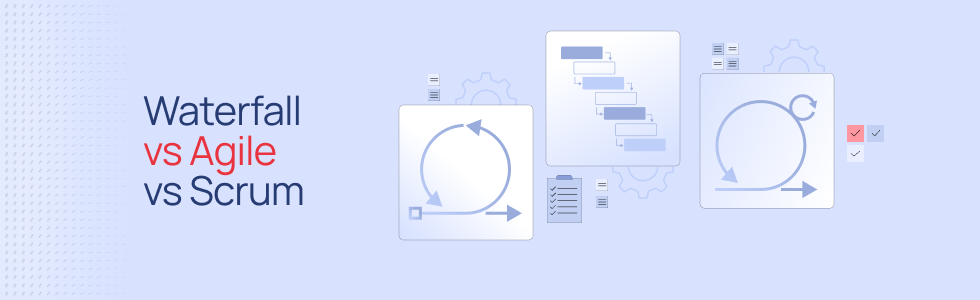
When it comes to managing software projects, especially in complex and dynamic environments, choosing the right methodology can make or break the success of your initiative. The three most discussed methodologies in the project management world are Waterfall, Agile, and Scrum.
Vertex helps you understand the core differences and the unique advantages of each to ensure that you select the best approach based on your project requirements.
The Waterfall Model
The Waterfall model is one of the oldest project management methodologies and follows a linear, sequential approach. Each phase of the project is completed before moving on to the next. Waterfall works best in scenarios where the project requirements are well-defined from the outset, and there is little to no scope for changes during the process.
Key Features of Waterfall:
- Linear & Sequential: The project progresses from one phase to another in a fixed order, often starting with requirements gathering, followed by design, implementation, testing, deployment, and maintenance.
- Rigid Structure: Once a phase is completed, it is difficult to return it for revisions. This means that changes during the later stages are costly and time-consuming.
- Well-Defined Requirements: Waterfall is ideal when you have clear, unchanging requirements.
Example:
Waterfall is suitable for projects like building a bridge, where the scope and requirements are well-defined upfront, and changes are minimal. Another example could be creating a standard website for a business with fixed features, such as a corporate informational site.
Agile Methodology
Agile methodology focuses on iterative development and flexibility. Unlike Waterfall, Agile doesn’t follow a linear process. Instead, work is divided into smaller chunks known as iterations, which allow teams to develop the product gradually with frequent feedback from stakeholders. This approach is highly adaptable, making it suitable for projects where the scope may change, or when customer feedback is essential during development.
Key Features of Agile:
- Iterative & Incremental: The project is broken down into smaller iterations (typically 1-4 weeks) where a small part of the product is built and delivered at the end of each iteration.
- Customer Collaboration: Agile emphasizes continuous collaboration with stakeholders and customers, making it easier to make changes or improvements based on feedback.
- Flexible & Adaptable: Agile allows for flexibility in terms of design and scope as it evolves throughout the project lifecycle.
Example:
Agile is ideal for projects like mobile app development, where user feedback and new requirements frequently change the course of development. For instance, building a social media app may involve frequent updates and features based on ongoing user feedback.
Scrum Framework
Scrum is a framework under the Agile umbrella but provides more structure. It introduces defined roles, specific events, and certain artifacts that give teams a focused direction. Scrum divides the project into time-boxed iterations known as sprints, which typically last 2-4 weeks. Scrum is used for projects requiring continuous delivery and is effective in handling complex tasks with evolving requirements.
Key Features of Scrum:
- Roles: The three main roles in Scrum are the Product Owner, Scrum Master, and Development Team.
- Sprints: Scrum divides the project into sprints, with a fixed time frame (usually 2-4 weeks), where a specific set of tasks is completed.
- Daily Standups: Teams hold daily meetings to discuss progress, blockers, and next steps, ensuring constant communication and alignment.
Example:
Scrum works well for teams developing a cloud-based platform with multiple features that need regular updates. A good example is an eCommerce platform where new features like payment gateways, user interfaces, and product management tools are frequently added in sprints.
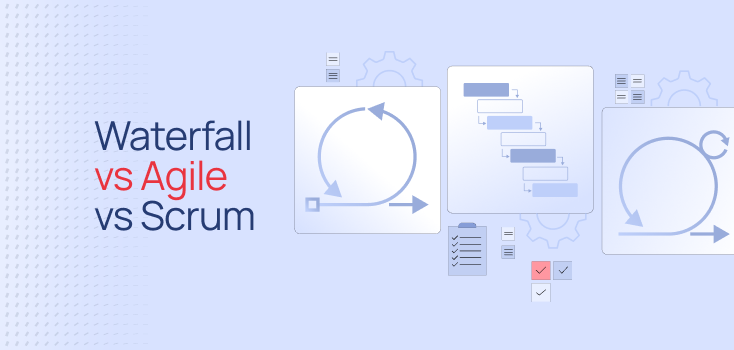
Waterfall vs Agile vs Scrum
Below is a comparison of the three methodologies based on key criteria:
| Criteria | Waterfall | Agile | Scrum |
| Approach | Sequential & linear | Iterative & flexible | Iterative & structured |
| Structure | Fixed and rigid | Flexible and adaptive | Fixed roles & processes within Agile |
| Project Phases | Well-defined, fixed upfront | Evolving phases based on feedback | Divided into time-boxed sprints |
| Flexibility | Low flexibility once phases start | High flexibility for changes throughout | Moderate flexibility within sprints |
| Ideal For | Well-defined projects with minimal changes | Projects with evolving requirements | Projects needing frequent iterations & updates |
| Example | Construction projects, static websites | Mobile app development, software upgrades | Cloud platform development, software products |
Subscribe Newsletter for Latest Updates
Ensure Your Project Success with the Right Methodology
Choosing the right project management methodology is crucial for success. Waterfall offers structure; Agile provides flexibility, and Scrum focuses on iterative progress. The key is selecting the approach that aligns with your goals to ensure smooth workflows, better communication, and timely delivery.
Vertex provides expert staff augmentation and project outsourcing services, helping teams effectively implement Scrum and Agile methodologies. Whether you need extra resources to support your Scrum cycles or full-scale Agile project management, we tailor our solutions to meet your needs and drive successful outcomes.
Let’s work together to bring your project vision to life. Contact Vertex today to get started!
FAQs
What Is the Main Difference Between Waterfall and Agile?
Waterfall follows a rigid, sequential approach, while Agile focuses on flexibility and iterative progress with frequent adjustments based on feedback.
What Are the Key Roles in Scrum?
Scrum defines three main roles: Product Owner, Scrum Master, and Development Team, each with specific responsibilities.
When Should You Use the Waterfall Methodology?
Waterfall is best for projects where the requirements are clear from the start and unlikely to change, such as construction or government projects.
How Does Scrum Differ from Agile?
Scrum is a specific framework within Agile that focuses on structured roles, events, and time-boxed iterations to deliver parts of a project in sprints.
Can Agile Be Used for Software Development?
Yes, Agile is ideal for software development projects, especially those that require regular feedback, adjustments, and iterative delivery of features.
Related Blogs
Digital Transformation Challenges: Why Most Companies Fail to Modernize
Digital transformation challenges are stopping many companies from scaling and achieving their intended outcomes.
What Are the 12 Principles of Agile Manifesto?
Software teams have moved from just building products to creating, testing, learning, and adjusting in…
What Is Scrum Methodology in Software Development?
Scrum methodology offers a structured yet flexible approach that helps teams manage complex projects with…