


What Is Scrum Methodology in Software Development?
January 28, 2026 • By Peter Stakoun
Scrum methodology offers a structured yet flexible approach that helps teams manage complex projects with ease. By breaking down projects into smaller chunks and working in short cycles known as sprints, Scrum promotes continuous progress and quick adaptation to changes.
With its emphasis on collaboration, transparency, and iterative improvement, Scrum keeps teams aligned and responsive throughout the project lifecycle.
What Is Scrum Methodology in Software Development?
Scrum is an Agile framework used to guide the development of software and products in a collaborative and iterative manner. It emphasizes teamwork, accountability, and continuous improvement. Scrum methodology breaks down the development process into manageable chunks and focuses on delivering small and incremental improvements.
In software development, Scrum enables teams to adapt quickly to changes, reduce risks, and ensure high-quality output. Instead of a linear process, Scrum encourages iterative cycles known as sprints where teams can reassess and improve their work continuously.
What is Scrum Methodology in Agile?
Scrum is one of the most popular frameworks within the Agile methodology. Agile is a mindset or philosophy that emphasizes collaboration and customer-centricity. Its aim is to deliver high-quality software in short cycles. Scrum provides a set of roles, events, and artifacts that help Agile teams implement this philosophy in a practical way.
Unlike traditional project management approaches, Agile and Scrum allow for constant feedback and ensure that software meets the needs of the client while adapting to evolving requirements.
In Agile, the team’s focus is on delivering customer value in each iteration, making it highly adaptable and responsive to change.
What Is a Sprint in Scrum Methodology?
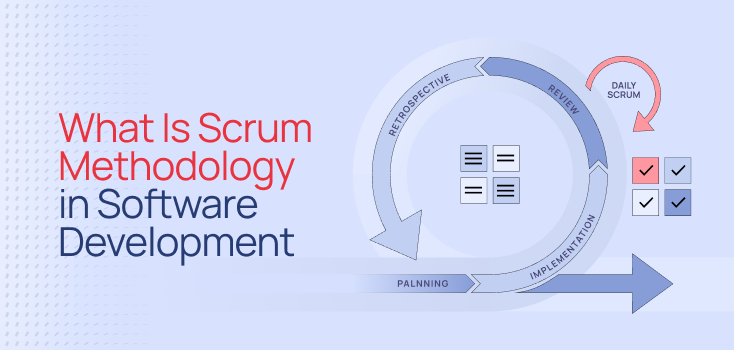
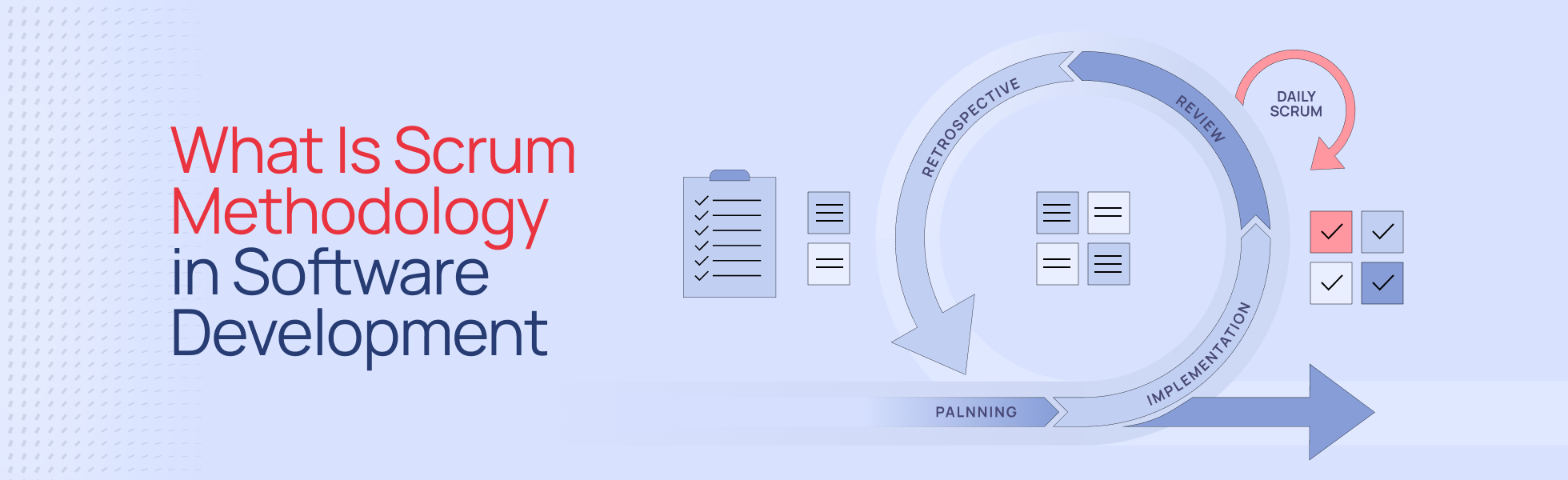
In Scrum, a sprint is a time-boxed development cycle that typically lasts for two to four weeks. During the sprint, its Scrum team works to complete a specific set of tasks or deliverables.
At the beginning of each sprint, the team holds a Sprint Planning meeting where they identify which features or user stories they will work on. These tasks are pulled from the product backlog (a prioritized list of features).
At the end of the sprint, the team holds a Sprint Review to demonstrate what has been completed and gather feedback. They also conduct a Sprint Retrospective to discuss what went well, what could be improved, and how to implement improvements in the next sprint.
Sprints in Scrum allow teams to focus on smaller tasks while delivering incremental value at regular intervals.
What is Scrum in Project Management?
Scrum methodology in project management focuses on managing and delivering projects in small, manageable pieces. It is not only effective for software development but also applicable to other industries, including marketing, finance, and education. In Scrum, the team works in cross-functional groups where each member brings a unique skill set, fostering collaboration, and enhancing overall productivity.
The Scrum framework provides a structured approach to project management by organizing work into roles, events, and artifacts:
- Roles: Scrum defines three key roles including the Product Owner (who defines the features and priorities), the Scrum Master (who ensures that the team follows the Scrum process), and the Development Team (who carries out the work).
- Events: These include Sprint Planning, Daily Scrum (stand-ups), Sprint Review, and Sprint Retrospective.
- Artifacts: Scrum uses three main artifacts to track progress: the Product Backlog, Sprint Backlog, and Increment.
By focusing on delivering incremental value at the end of each sprint, Scrum ensures that project timelines are optimized, and risks are managed effectively. It also encourages flexibility, allowing teams to adjust their goals based on feedback and changing requirements.
Characteristics of Scrum Methodology
Scrum methodology has several key characteristics that make it highly effective in software development and project management:
- Iterative and Incremental: Scrum breaks the development process into smaller, manageable chunks known as sprints, allowing teams to deliver incremental value at the end of each cycle.
- Collaborative: Scrum encourages collaboration among cross-functional teams, making it easier to solve problems and achieve goals.
- Customer-Centric: Scrum places the customer at the heart of the process by regularly reviewing and adapting the product to meet their needs.
- Transparency: Scrum ensures that all team members are on the same page with the help of daily stand-ups, sprint reviews, and retrospectives.
- Continuous Improvement: Through regular feedback loops (sprint reviews and retrospectives), teams can identify areas for improvement and optimize their processes.
- Adaptability: Scrum embraces change and allows teams to adjust quickly to new requirements, technological advancements, or market shifts.
Scrum Process Methodology
The Scrum process methodology includes the following key phases and events:
Sprint Planning
The team defines the goals and tasks for the upcoming sprint. They pull items from the product backlog and commit to completing them within the sprint.
Daily Scrum (Stand-ups)
Every day, the team gathers for a brief meeting to discuss progress, challenges, and what they plan to work on next.
Sprint Review
At the end of each sprint, the team reviews the work completed and demonstrates it to stakeholders for feedback.
Sprint Retrospective
The team reflects on the sprint process to identify what went well and what could be improved for the next iteration.
Backlog Refinement
The team regularly revisits and refines the product backlog, ensuring that it reflects the current priorities and objectives.
Subscribe Newsletter for Latest Updates
Why Scrum Works for Vertex?
Scrum is a key part of our software development and project management process at Vertex. It enables us to deliver high-quality, customer-focused solutions through a flexible and collaborative approach. By breaking down complex projects into manageable sprints, we can respond quickly to client needs, adapt to changes, and deliver continuous improvements.
Scrum encourages collaboration, transparency, and accountability within the team. It also results in efficient project execution and superior results. Whether you’re a software development team or working on other types of projects, Scrum provides a powerful framework to help you achieve your goals and improve project outcomes.
If you want to learn more about how Scrum can optimize your project management processes, feel free to get in touch with Vertex today! We’re here to help you streamline your operations and boost productivity using Agile and Scrum methodologies.
FAQs
What are the Main Benefits of Using Scrum in Software Development?
Scrum provides promotes continuous improvement and ensures regular feedback that helps teams deliver high-quality products in manageable chunks. It enhances collaboration and adaptability, ensuring customer satisfaction.
How does Scrum Improve Team Collaboration?
Scrum promotes daily stand-ups and regular sprint retrospectives, ensuring constant communication. The collaborative nature of cross-functional teams allows for diverse input, fosters problem-solving, and efficient decision-making.
Can Scrum be Applied Outside of Software Development?
Yes, Scrum is not limited to software development. It can be applied to other industries such as marketing, finance, and education, offering a structured approach to managing projects in any field.
What is the Role of the Scrum Master?
The Scrum Master facilitates the Scrum process and ensures that the team follows Scrum practices. They remove obstacles, support the team’s progress, and help the team stay focused on the goals for each sprint.
How does Scrum Handle Changing Requirements?
through iterative sprints. As each sprint ends, teams review progress, get feedback, and adapt the backlog and priorities, ensuring that the product evolves according to new requirements or market shifts.
What is Sprint and Scrum in Agile Methodology?
Scrum is an Agile framework that helps teams deliver value incrementally. A sprint is a time-boxed iteration within Scrum where a team completes selected work and delivers a potentially shippable product increment.
Related Blogs

Digital Transformation Challenges: Why Most Companies Fail to Modernize
Digital transformation challenges are stopping many companies from scaling and achieving their intended outcomes.

What Are the 12 Principles of Agile Manifesto?
Software teams have moved from just building products to creating, testing, learning, and adjusting in…
Waterfall vs Agile vs Scrum: Understanding the Best Project Management Methodology
When it comes to managing software projects, especially in complex and dynamic environments, choosing the…