

What Is Agile Project Management Methodology? Phases and Advantages
January 27, 2026 • By Peter Stakoun
Agile focuses on adaptability, collaboration, and continuous improvement. Instead of delivering everything at the end, teams work in small cycles, release value early, and refine constantly. This is a product management approach that has become the backbone of successful software development, product design, and even marketing teams worldwide.
Let’s explore what Agile really means, how it works, and why it has become the gold standard for modern project delivery.
What Is Agile Project Management?
So, what is agile methodology in project management?
Agile is an iterative and incremental approach to managing projects. Rather than planning everything upfront, Agile breaks work into small, manageable units called iterations or sprints. Each sprint delivers a usable outcome, gathers feedback, and adapts the next cycle accordingly.
In project management in agile methodology, teams:
- Work in short cycles (usually 1–4 weeks)
- Collaborate closely with stakeholders
- Deliver functional outcomes frequently
- Adapt plans based on real-world feedback
The goal is simple: reduce risk, improve speed, and ensure the final product truly meets user needs.
Types of Agile Project Management
Agile is not a single framework. It’s an umbrella philosophy with multiple execution models:
- Scrum: Uses fixed-length sprints, defined roles (Product Owner, Scrum Master, Development Team), and ceremonies like sprint planning and retrospectives.
- Kanban: Visual workflow management focused on continuous delivery and limiting work-in-progress.
- Extreme Programming (XP): Emphasizes engineering excellence, pair programming, and frequent releases.
- Lean: Focuses on eliminating waste and maximizing customer value.
Each model applies agile methodology in project management differently, but all follow the same core mindset: adapt fast and deliver continuously.
Also read our guide on what is scrum
4 Principles of Agile Management
Agile is guided by a set of human-centered principles that reshape how teams think, plan, and execute. These principles move project management away from rigid hierarchies and static plans, and toward adaptability, collaboration, and continuous value delivery.
1) Customer Collaboration Over Contract Negotiation
Traditional models often treat client relationships as transactional. Agile replaces this with ongoing collaboration. Instead of locking requirements at the start, teams work closely with stakeholders throughout the project. Regular demos, reviews, and feedback loops ensure that what’s being built actually matches evolving business needs. This reduces rework, minimizes misunderstandings, and keeps the product aligned with real-world expectations.
2) Working Solutions Over Heavy Documentation
Agile prioritizes tangible outcomes. Rather than spending weeks producing exhaustive documentation, teams focus on delivering functional increments of the product. Documentation still exists, but it supports delivery instead of delaying it. This approach ensures that value reaches users sooner, and that progress is measured by what works, not by what’s written.
3) Responding to Change Over Following a Fixed Plan
Markets shift, technologies evolve, and user expectations change. Agile treats change as an opportunity rather than a disruption. Plans are intentionally flexible, allowing teams to pivot based on new insights, data, or feedback. This principle ensures that projects remain relevant and competitive, even in fast-moving industries like software and IT services.
4) Individuals and Interactions Over Tools and Processes
Agile recognizes that great outcomes come from empowered people, not just perfect systems. While tools and frameworks matter, they never replace communication, trust, and teamwork. Daily stand-ups, retrospectives, and cross-functional collaboration encourage transparency and shared ownership. The result is faster problem-solving and stronger team alignment.
7 Agile Methodology Project Management Steps
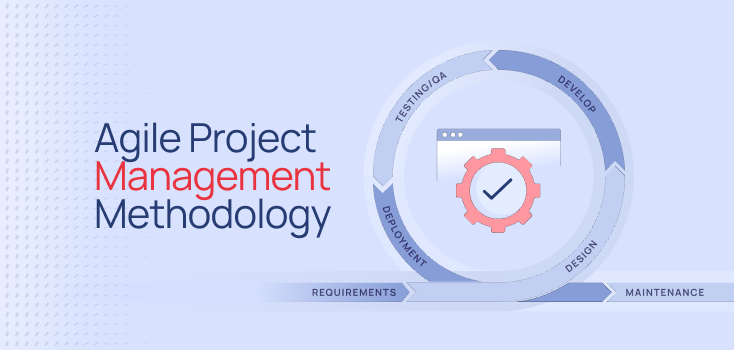
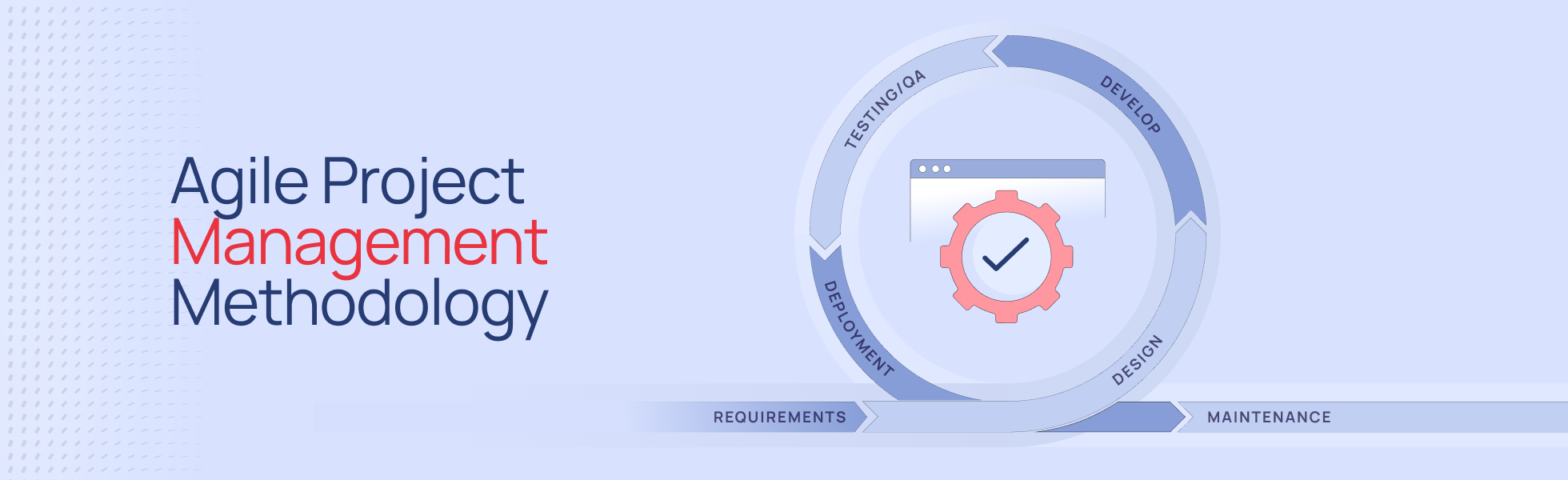
While Agile is flexible, most teams follow a common flow. These agile methodology project management steps form a continuous cycle:
- Concept & Planning: Define goals, user needs, and high-level scope.
- Backlog Creation: Break work into prioritized user stories.
- Sprint Planning: Select tasks for the next iteration.
- Development & Testing: Build, test, and refine in short cycles.
- Review & Feedback: Present results to stakeholders and users.
- Retrospective: Reflect on what worked and what didn’t.
- Iteration: Improve and repeat with the next sprint.
This loop keeps projects moving forward while staying aligned with real-world needs.
Advantages of Agile Project Management Methodology
The impact of Agile goes far beyond faster delivery. It reshapes how organizations operate, learn, and grow.
Faster Time-to-Market
Agile’s iterative approach enables teams to release usable features early and often. Instead of waiting months for a “final” product, stakeholders begin seeing value within weeks. This speed is critical in competitive markets where being first can define success.
Higher Product Quality
Continuous testing and frequent reviews help catch issues early. Each sprint includes validation, reducing the risk of major failures at the end. Quality becomes part of the process, not a final checkpoint.
Improved Customer Satisfaction
Regular feedback ensures that users are part of the journey, not just the destination. Customers see their input reflected in real time, building trust and ensuring the final product genuinely solves their problems.
Reduced Project Risk
Agile breaks large projects into manageable pieces. Risks surface early, when they are cheaper and easier to fix. This visibility prevents surprises and keeps teams in control.
Stronger Team Engagement
Agile teams are self-organizing and empowered. Clear goals, open communication, and shared responsibility create a sense of ownership. This leads to higher morale, better collaboration, and lower burnout.
Greater Business Agility
Organizations using Agile can respond faster to market shifts, new technologies, and customer demands. Product strategy becomes dynamic rather than static, allowing businesses to evolve without losing momentum.
Subscribe Newsletter for Latest Updates
Manage Your Agile Projects with Vertex
Agile project management methodology empowers teams to adapt, collaborate, and deliver real value in fast-moving environments. From flexible planning and iterative delivery to continuous feedback and improvement, Agile transforms how modern projects succeed.
We bring these principles to life through structured, people-first agile management services tailored to your business goals. Whether you’re building a new product, scaling a development team, or modernizing your workflows, our experts help you implement Agile the right way.
Partner with Vertex to streamline delivery, reduce risk, and build high-performing teams that move with speed and clarity. Let’s help you turn complexity into momentum and take every project closer to its peak.
FAQs
What Is the Rule of 353?
The 3-5-3 rule is a Scrum guideline for sprint planning:
- 3 main objectives
- 5 key tasks per objective
- 3 days maximum per task
It helps teams keep work focused, realistic, and achievable within a sprint.
Is Scrum a Part of Agile?
Yes. Scrum is one of the most popular frameworks within Agile. Agile is the philosophy and Scrum is a structured way to implement it.
Who Is the Product Owner in Agile?
The Product Owner represents the customer and business. They prioritize the backlog, define requirements, and ensure the team delivers maximum value.
Related Blogs
What Is Scrum Methodology in Software Development?
Scrum methodology offers a structured yet flexible approach that helps teams manage complex projects with…
How Can Product Strategy Drive Business Success?
A well-defined product strategy is crucial for companies seeking to stay ahead of the competition…